-
Call: (214) 813-3516Call: (214) 813-3516
-
6251 West University Drive Suite 101 McKinney, Texas 75071


Spinal Decompression in McKinney, TX: What to Expect at Your First Appointment
See what a spinal decompression session in McKinney involves, from screening to your first visit. Learn how candidacy is assessed and book an evaluation.
Last Updated: November 7, 2026
Quick Summary
Nonsurgical spinal decompression is a conservative treatment option that may be considered for certain patients experiencing disc-related back pain, neck pain, or sciatica.
At DrO Chiropractic and Wellness in McKinney, Texas, your first visit begins with a thorough chiropractic evaluation to understand your symptoms, medical history, and treatment goals.
- Your chiropractor evaluates your spinal health, movement, neurological findings, and relevant medical history before recommending treatment.
- Previous X-rays or MRI reports may be reviewed when available. Additional imaging is recommended only when clinically indicated.
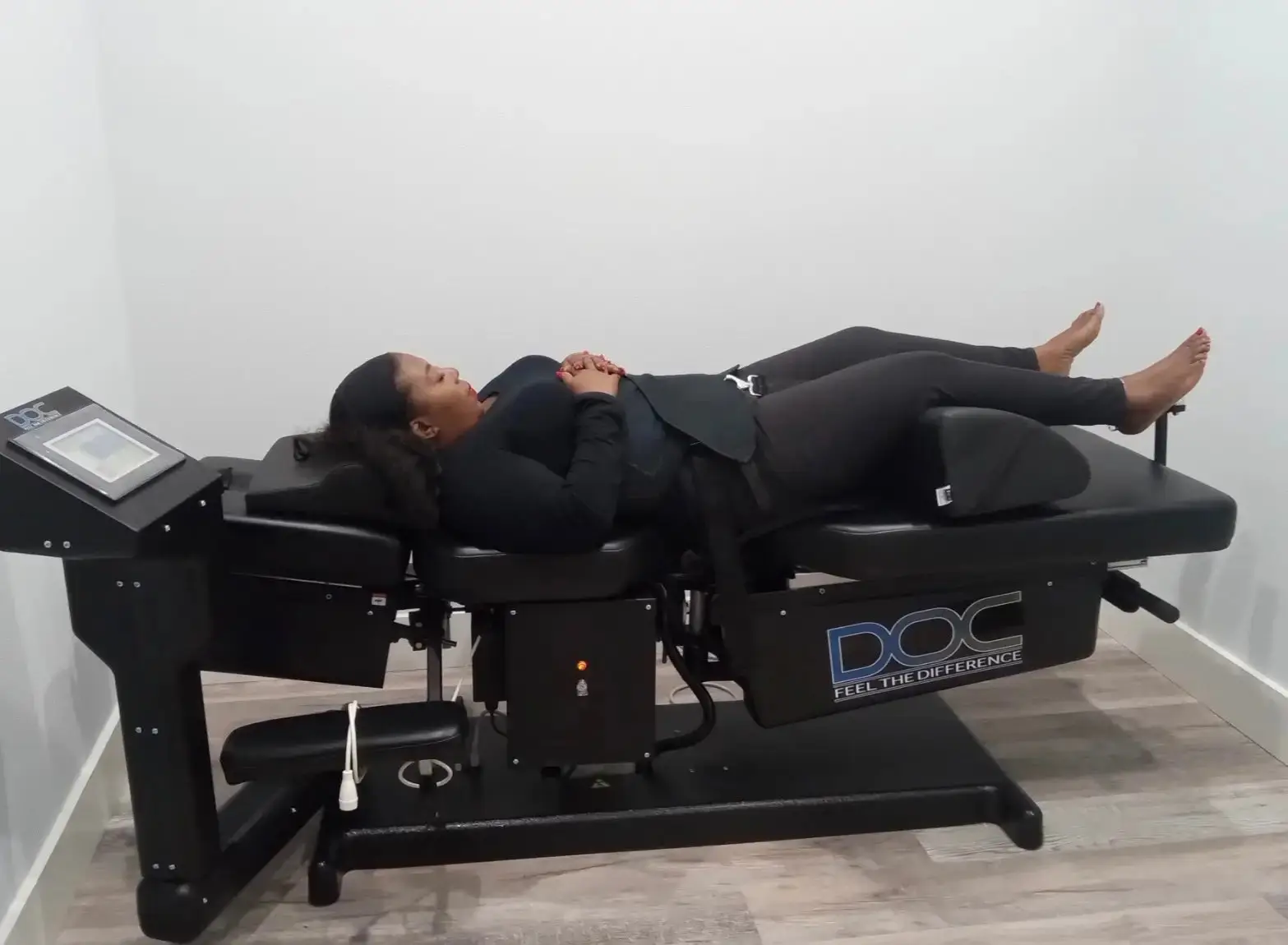
- Spinal decompression uses controlled motorized traction to apply gentle pulling forces to the spine.
- Treatment recommendations are individualized, and results vary depending on your condition.
- Patients with certain conditions, including spinal instability, fractures, or severe osteoporosis, may not be appropriate candidates for decompression.
- New loss of bladder or bowel control, saddle numbness, or rapidly worsening leg weakness requires emergency medical attention.
Ready to find out whether spinal decompression may be appropriate for you?
Wondering if decompression is right for you?Schedule a spinal evaluation at DrO Chiropractic and Wellness to see what fits your back pain.
Table of Contents
- What Nonsurgical Spinal Decompression Actually Is
- What Happens at a Spinal Decompression Consultation
- Spinal Decompression for Herniated Disc and Sciatica Symptoms
- How Long Does a Spinal Decompression Session Take?
- Spinal Decompression Risks and Limitations to Know First
- Who May Be a Candidate and Who Should Look Elsewhere
- How to Book Your First Visit at DrO Chiropractic and Wellness
- Frequently Asked Questions
What Nonsurgical Spinal Decompression Actually Is
Nonsurgical spinal decompression is a form of motorized spinal traction that applies controlled pulling forces to the spine. This treatment is designed to reduce mechanical stress on spinal structures and may provide symptom relief for some patients experiencing disc-related back pain, neck pain, or sciatica. The Cleveland Clinic describes traction as a nonsurgical approach that uses controlled forces to stretch the spine.
At DrO Chiropractic and Wellness in McKinney, Texas, we offer nonsurgical spinal decompression as one of our conservative treatment options for appropriate patients.
During treatment, a specialized spinal decompression table alternates between controlled traction and relaxation phases. These carefully regulated movements are intended to reduce mechanical loading on spinal structures and may help improve comfort and mobility.
Spinal decompression is sometimes described as creating negative pressure within spinal discs. However, research has not established that this treatment reliably reverses disc herniations or permanently relieves nerve compression. Some patients experience improvements in pain and function, while others may experience limited benefit. Treatment outcomes vary.
At DrO Chiropractic and Wellness, Dr. MaryAnn Osifo evaluates each patient’s symptoms, medical history, spinal health, and functional limitations to determine whether spinal decompression may be appropriate as part of an individualized care plan.
Interested in finding out whether spinal decompression is right for you? Schedule your consultation to discuss your treatment options.
What Happens at a Spinal Decompression Consultation
Your first visit to DrO Chiropractic and Wellness begins with a comprehensive chiropractic evaluation. Our clinical team takes time to understand your symptoms, review your health history, assess your functional limitations, and discuss any relevant previous imaging.
Based on the evaluation findings, we develop an individualized care plan and determine whether spinal decompression or other conservative treatment options may be appropriate.
Your History and Symptom Review
Expect detailed questions about when the pain started, what makes it worse, and whether it travels into the leg or arm. Describing numbness, tingling, or weakness matters because those point to nerve involvement. Bring any MRI or X-ray reports already on hand. A history of surgery, fractures, or osteoporosis is important to mention.
The Physical and Neurological Exam
The exam usually includes posture and range-of-motion checks, gentle palpation, and simple neurological tests such as reflexes, sensation, and muscle strength. These help the clinician understand which spinal level is involved and whether the symptoms fit a disc or nerve pattern. According to the American Association of Neurological Surgeons overview of herniated discs, most disc-related pain improves with conservative care, which is why a careful exam comes before any table time.
Spinal Decompression for Herniated Disc and Sciatica Symptoms
Patients experiencing herniated discs, sciatica, or certain disc-related symptoms may be evaluated to determine whether spinal decompression is appropriate.
Sciatica can cause pain, tingling, numbness, or burning sensations that travel from the lower back into the buttock or leg. These symptoms may result from irritation or compression of spinal nerve roots. The American Association of Neurological Surgeons explains that many herniated discs can be managed without surgery, although treatment depends on symptoms and neurological findings.
Nonsurgical spinal decompression may be considered as part of conservative care for selected patients. However, treatment outcomes vary, the evidence remains mixed, and not every patient with a herniated disc or sciatica is a suitable candidate.
At DrO Chiropractic and Wellness, treatment recommendations are based on individual examination findings, symptom patterns, and clinical needs.
Results vary widely. Some patients report meaningful relief within a few weeks, while others see little change. A 2021 review indexed by the National Library of Medicine on lumbar disc herniation management notes that conservative options are reasonable first steps for many patients without red-flag symptoms.
For patients whose pain involves disc pressure, the clinic’s disc therapy options may be discussed alongside decompression. Anyone with worsening weakness, loss of bladder or bowel control, or saddle numbness needs urgent medical evaluation, not a scheduled table session.
How Long Does a Spinal Decompression Session Take?
The first visit is longer because it includes the full consultation and exam, so plan on a longer block of time for that appointment than for follow-up sessions.
What a typical session involves
Most sessions follow a similar rhythm: you are positioned on the table, the harness or straps are fitted, the clinician sets the traction parameters for your case, and the table cycles through pull-and-release phases. You rest briefly afterward before heading out. The exact setup time varies with body size, the spinal region being treated, and how much time is needed to get you comfortable.
Frequency and timeline
The recommended frequency and duration of spinal decompression treatment depend on each patient’s condition, symptoms, clinical findings, and response to care.
Following the initial evaluation, we discuss an individualized treatment plan, including the recommended number and frequency of visits when appropriate.
Progress is monitored throughout care, with periodic reassessments to evaluate changes in symptoms, mobility, functional abilities, and treatment goals.
If a patient is not responding as expected, the treatment approach may be modified, discontinued, or additional medical evaluation may be recommended.
What can change the plan
Several factors can shift the schedule: how you respond in the first couple of weeks, whether new symptoms appear, how well you tolerate the table, and whether imaging or a specialist opinion changes the picture. Some patients need a shorter course; others need more time or a different approach entirely. Progress is measured by function and symptom change, not by the number of sessions completed.
Spinal Decompression Risks and Limitations to Know First
Spinal decompression is a noninvasive treatment, but it is not risk-free or appropriate for everyone. Temporary soreness, muscle discomfort, or worsening symptoms may occur. A careful examination and review of medical history help determine whether treatment is appropriate.
Limitations deserve equal airtime. The evidence is not strong enough to promise outcomes, and some patients simply do not respond. Back pain is extremely common, and the broader context on how common back pain is helps explain why conservative care is often tried before more invasive options. Clinical guidelines also recognize limitations in the evidence for traction. The National Institute for Health and Care Excellence (NICE) recommends against routinely offering traction for low back pain with or without sciatica.
Watch out: skipping the screening step to get on a table faster is the mistake that matters most. A patient with an undiagnosed fracture or unstable spine should not be treated with traction.
Who May Be a Candidate and Who Should Look Elsewhere
Candidacy is decided by the exam, not by a symptom checklist. Reasonable candidates often have disc-related pain, a clear nerve pattern, and no red-flag findings. Patients who have not improved with basic conservative care are also commonly evaluated.
Decompression is generally not appropriate for people who are pregnant, have severe osteoporosis, spinal fractures, tumors, or certain metal implants in the treated area. Anyone with progressive neurological loss needs a physician’s assessment first. The clinic’s chiropractic care evaluation helps sort this out, and some patients are better served by a different approach entirely, including referral to a spine specialist. Not everyone with a herniated disc is a candidate, and saying so plainly is part of good care.
How to Book Your First Visit at DrO Chiropractic and Wellness
Getting started with spinal decompression care is simple.
Step 1: Schedule Your Consultation
Visit our online scheduling page and select the appropriate new-patient appointment.
Step 2: Prepare for Your Visit
Bring a list of your current medications, relevant medical history, and any previous spinal X-ray or MRI reports you may have. Our team can provide instructions regarding paperwork and arrival time.
Step 3: Your Initial Evaluation
During your initial evaluation, your chiropractor will review your symptoms, assess your spinal and musculoskeletal health, and discuss whether spinal decompression or another treatment approach may be appropriate.
Our goal is to help you understand your options and make informed decisions about your care.
Cost, insurance, and scheduling practicalities
The cost of spinal decompression care depends on the patient’s clinical findings and recommended treatment plan.
At DrO Chiropractic and Wellness, we offer self-pay options and accept eligible HSA/FSA payments. Insurance coverage varies, and nonsurgical spinal decompression may not be covered by certain insurance plans.
Our team can explain appointment fees, treatment recommendations, and available payment options before care begins.
To schedule your initial consultation, visit our online booking page.
Dr. MaryAnn Osifo is a Doctor of Chiropractic and Clinic Director of DrO Chiropractic and Wellness in McKinney, Texas. With more than a decade of clinical experience, she provides individualized chiropractic and wellness care focused on musculoskeletal health, mobility, and functional improvement.
Back pain that has lingered for months deserves a real evaluation rather than another round of guesswork.
Frequently Asked Questions
Will insurance pay for spinal decompression therapy?
Insurance coverage for nonsurgical spinal decompression varies, and many plans do not cover this treatment.
DrO Chiropractic and Wellness offers self-pay options and accepts eligible HSA/FSA payments. Our team can discuss pricing, insurance questions, and available payment options before treatment begins.
How long does a spinal decompression session take?
The decompression table portion usually runs in the range of 20 to 45 minutes, depending on the protocol your clinician sets. Add time for any warm-up therapies, stretching, or chiropractic care scheduled the same day, so plan on roughly an hour at the office. Your spinal decompression session length can change as your treatment plan progresses. Ask at your consultation what your specific appointments will look like.
Does spinal decompression help with a herniated disc or sciatica?
Some studies report reduced pain and improved function in selected patients with disc-related leg pain, but the evidence is mixed and results vary. Spinal decompression for herniated disc symptoms is not a repair procedure, and it does not guarantee relief. A clinical evaluation is needed to confirm whether your symptoms match the disc or nerve pattern this therapy targets. If imaging or red-flag signs suggest something else, your clinician should refer you for medical follow-up.
What are the possible risks or limitations of spinal decompression?
Spinal decompression risks and limitations include temporary soreness, mild muscle stiffness, and the chance of little or no improvement. It is generally not appropriate in certain situations, such as during pregnancy or with conditions like severe osteoporosis or spinal fracture, so screening is needed. Anyone with progressive weakness, bowel or bladder changes, fever, or unexplained weight loss needs medical evaluation before therapy. Your clinician should screen for these during your consultation.
